
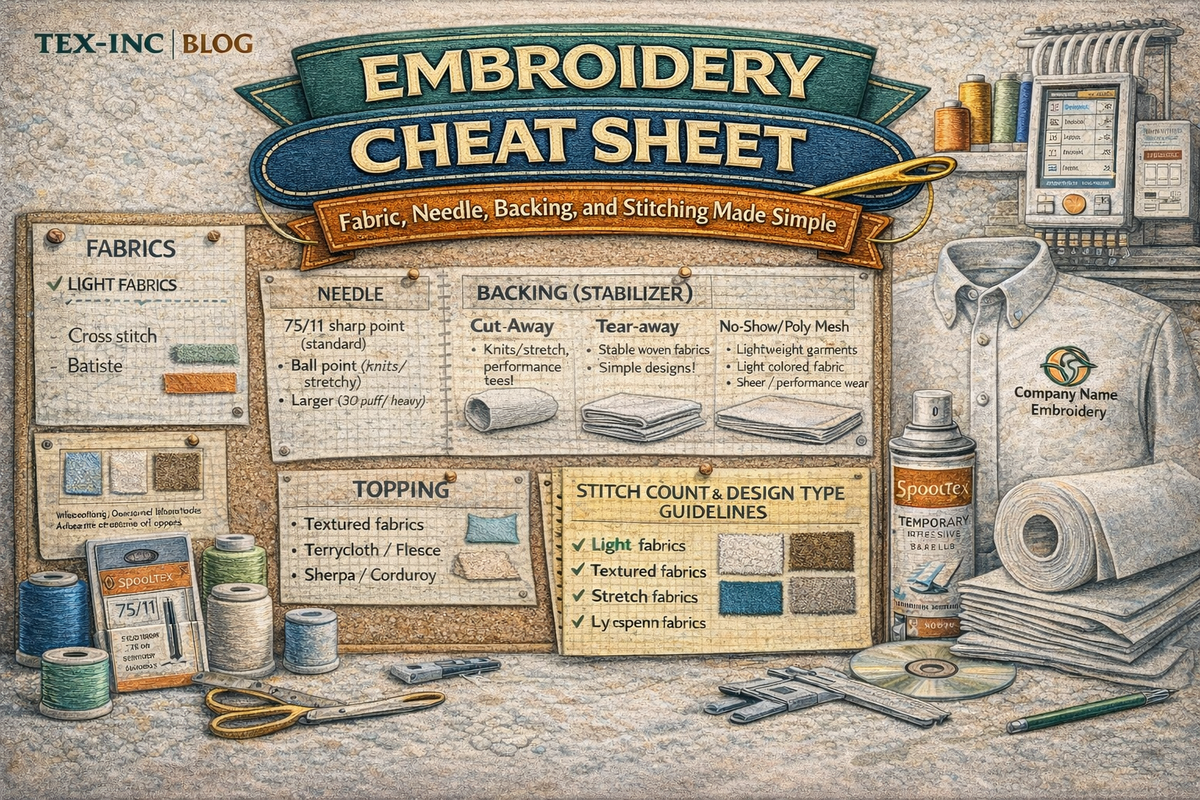
Embroidery Cheat Sheet: Fabric, Needle, Backing, and Stitching Made Simple
Every embroiderer—beginner or professional—shares the same goal: clean, consistent, high-quality embroidery. The challenge is that not all fabrics behave the same, and what works perfectly on one garment can fail completely on another.
That’s where an embroidery cheat sheet becomes invaluable.
Instead of guessing, this guide breaks down how fabric type affects needle choice, backing, stitch density, and design selection, so you can make smarter decisions before stitching ever begins.
Why an Embroidery Cheat Sheet Matters
Most embroidery problems don’t start at the machine—they start with material mismatch.
Common issues include:
• Puckering
• Poor coverage
• Distorted designs
• Thread breaks
• Stiff or damaged garments
The right combination of needle, backing, stabilizer, and design type prevents these problems.
The Core Rule of Embroidery
Fabric stability determines everything.
According to the guide, stretchy garments that will be washed often almost always require cut-away backing, while more stable fabrics can often use tear-away
High stitch counts = more support
Stretch = permanent support
Texture = surface control
Needle Selection Basics
Across most fabrics in the chart, a 75/11 sharp point needle is the standard starting point
When to adjust:
• Ball point needles for knits and performance wear
• Larger needles (80/12–90/14) for heavy fabrics or 3D puff
• Smaller needles for delicate fabrics with light stitch counts
A worn or incorrect needle causes more issues than most settings combined.
Backing (Stabilizer) Selection Made Simple
Cut-Away Backing
Best for:
• Knits
• Polos
• Performance wear
• Stretch fabrics
• High stitch count designs
Provides long-term support and prevents distortion after washing
Tear-Away Backing
Best for:
• Stable woven fabrics
• Non-wearables
• Simple, open designs
Quick to remove, but not ideal for stretch or heavy designs.
No-Show / Poly Mesh Backing
Best for:
• Lightweight garments
• Light-colored fabrics
• Sheer or performance wear
Offers support without visible backing.
When to Use Topping (Water-Soluble Stabilizer)
Textured fabrics often swallow stitches.
The cheat sheet recommends water-soluble topping for:
• Terrycloth
• Fleece
• Sherpa
• Corduroy
• Faux fur
• Velvet
Topping keeps stitches sitting on the surface instead of sinking in.
Stitch Count and Design Type Guidelines
The guide repeatedly reinforces this principle:
• Lightweight fabrics → light, open designs
• Textured fabrics → avoid running stitches
• High-pile fabrics → satin or filled designs
• Stretch garments → moderate stitch density
Forcing heavy designs onto light fabrics is one of the most common embroidery mistakes
Temporary Adhesive Spray: When to Use It
Adhesive spray is recommended when:
• Hooping stretch fabrics
• Stabilizing knits
• Preventing fabric movement
Spray lightly—too much causes buildup and tension problems.
Fabric Behavior Is More Important Than Fabric Name
One of the most valuable takeaways from the cheat sheet is this:
If a fabric isn’t listed, choose a similar fabric and follow the same rules.
Focus on:
• Stretch
• Thickness
• Texture
• Wash frequency
Final Thoughts
Great embroidery doesn’t come from guessing—it comes from understanding how fabric, backing, needle, and design work together. An embroidery cheat sheet isn’t a shortcut; it’s a foundation.
At TEX-INC, we believe mastering these fundamentals saves time, reduces waste, and produces consistently professional results—no matter the fabric.
When setup is right, embroidery becomes predictable.